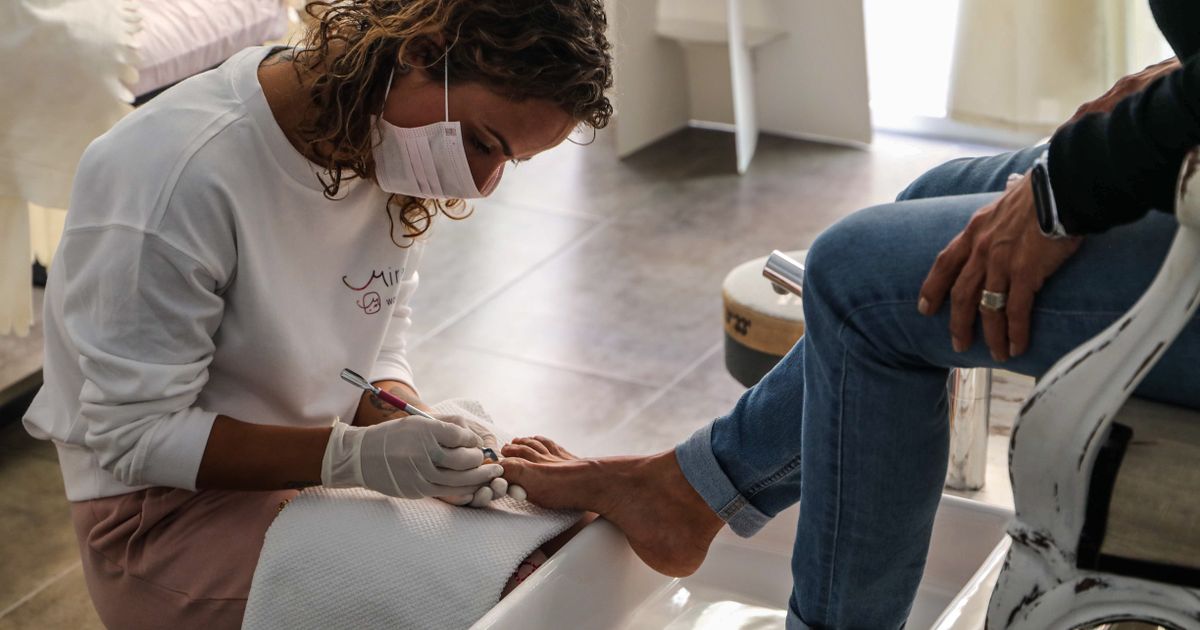
A nail salon lives on two numbers: how many stations are busy and how long each job really takes. Everything else — the brand of gel, the wall colour, the Instagram grid — matters less than whether a customer can get a 7 pm slot that starts within ten minutes of its time. This best-of guide compares the setup choices that owners in India actually face: which services to list, how to prove hygiene, how to time and price the work, how many technicians each station can carry, and how bookings and walk-ins share one queue. It ends with the local listing work that brings new clients in.
Key takeaways
- Sell time and hygiene as clearly as you sell colour.
- Price by length and finish, with the first price always visible.
- Count capacity in stations multiplied by honest slot length.
- Publish exact slots for long jobs and tokens for walk-ins.
What customers check before they book
Open your own listing on a phone and you will see the four things a customer weighs before choosing you: recent photos of actual work, a starting price, a rating with recent reviews, and an open time. In nail work specifically, photos carry extra weight because the result is visual and the risk is hygiene. A close-up of clean tools, a fresh buffer, and a tidy station persuades more people than any adjective in your bio.
Their second question is timing. Extensions and gel work occupy an hour or more, and a customer planning an after-office appointment needs to know that the slot is real. A listing that only says "call to book" pushes the decision back to a phone that rings while both technicians are working. Publishing exact times converts the interest you already paid for with your photos.
A hygiene checklist that sells itself
Hygiene is not a paragraph in your about page; it is a set of visible habits. Write the checklist, photograph it, and publish it:
- Files, buffers, and pushers are single-use or disinfected between clients, with the packet opened in front of the customer.
- Metal tools go through a documented cleaning and sterilisation cycle, and the pouch is part of the service photo.
- Towels and foot liners are fresh for every pedicure; bowls are cleaned and dried between clients.
- Gel curing lamps are wiped down, and the room is ventilated so polish odour does not sit in the waiting area.
- Technicians wash hands or change gloves between clients, and the polish bottles shared across clients are handled accordingly.
Customers search for these signals. Keep your category, hours, and photos accurate so a first-time visitor can verify you before travelling — Google's guidance on booking links for business profiles also covers what a listing should offer once a customer decides, and the schema.org LocalBusiness specification shows the fields machines read from your page.
Durations, price bands, and the refill rule
Every service needs three attached numbers: duration, starting price, and the technician level allowed to perform it. Time each service over three real jobs, add changeover, and publish that slot length. If extensions take 95 minutes in your room, publish 95, not 60 — a padded calendar produces a delay clock that nobody trusts.
Price in bands: a first price for a classic mani, a gel pedi, and a basic extension set, with length, brand, and art quoted at consultation. Publish the first price everywhere; salons that do get fewer price-only messages and more arrivals with the right budget. Then set a refill rule — for example, a reduced price within three weeks and full price after — so customers know exactly when to return instead of deciding a set has lasted long enough on their own.
Stations, technicians, and honest capacity
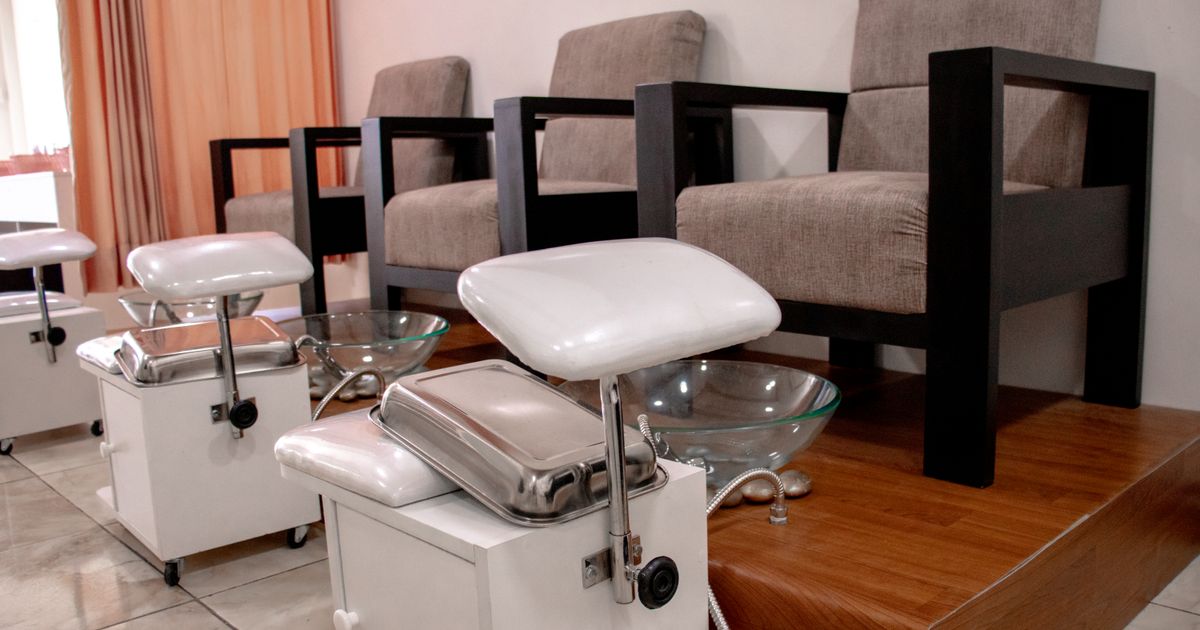
A room fits four tables; that does not mean you can sell four appointments an hour. Capacity is stations multiplied by slot length, minus breaks, cleaning between clients, technician leave, and the reality that one senior technician handles the long sets while a junior takes the quick services.
Write the day down station by station. If you have two technicians, each works an eight-hour shift with a half hour of breaks, and the average service takes 45 minutes with cleaning, your honest daily capacity is around 18 to 20 services — not 32. Compare that with the demand you actually see: weekday evenings and weekends will be full, Tuesday afternoon will not be. Publish availability that follows that pattern instead of a flat open calendar, and give each technician their own login so capacity and commission stay visible.
The booking and queue flow for nail work
The cleanest model for a nail salon mixes two entry points on one availability. Long services — gel, extensions, art, full pedicures — are booked as exact slots with a confirmation and a reminder, optionally with a small deposit to protect the time. Quick services — a repair, a repaint, a shape-and-file — can stay open for walk-ins, who take a token at the counter and join the same live queue.
What kills this model is separate systems. If booked clients sit in a diary and walk-ins sit on a paper pad, the technician gets double-booked and the delay is invisible to everyone waiting. One queue means the current token, the running delay, and the next free station are shown honestly, so a walk-in decides to wait instead of leaving. Add confirmation, a day-before reminder, and a rebooking prompt at the three-week mark, and the same system starts filling the refill gap that most nail studios lose to competitors. The salon appointment app guide shows this customer path in more detail.
How a nail salon gets found locally
Local discovery decides how many new customers ever see your menu. Claim and verify your business profile, choose the correct category — nail services sit under the beauty categories rather than a generic shop listing — and complete every field: address, hours, phone, services with first prices, and photos of real work. Reply to reviews, especially the critical ones, because a resolved complaint reads better than an untouched five-star page.
Then connect the dots. Put the booking link on the profile, in your Instagram bio, and on your website header; print the QR code at the counter so a friend of an existing client can book in the same visit. Keep hours accurate during festival weeks. Formalities should not hold you back either: register and file properly as you grow, using the india.gov.in portal for central schemes and state-level information relevant to small businesses.
Conclusion: run the stations, not the calendar
The best nail salon setup is one where every published slot matches a real station, a real technician, and a real amount of time — and where hygiene, prices, and availability are visible before a customer ever calls. Compare your current setup against that standard: menu with durations, visible first prices, a photographed hygiene routine, technician-wise availability, and one queue for bookings and walk-ins. Fix the gaps in that order. See how SWIQ handles it at queue management and appointment booking software from SWIQ, or book a free demo and run a busy Saturday through it with our team.
Practical next step: time your three most-booked nail services this week, add cleaning time, and publish exactly that as the slot — then check whether your listing shows the same duration.
Related SWIQ pages: Queue management software India · Book a free demo · salon booking system · salon appointment app
Frequently asked questions
How many stations does a small studio need?
Start with the stations you can keep busy through a normal week, not the ones that fit in the room. Two or three manicure stations and one pedicure position usually cover a neighbourhood salon, provided each slot length matches the real time a service takes.
What should be on a nail salon service menu?
Classic manicure and pedicure, gel polish, extensions or overlays, cuticle care, simple nail art, and a repair or refill. Price each by length and finish, give every one a duration, and keep the first price visible so customers arrive with the right budget.
How do I show that my studio is hygienic?
Photograph your sterilisation pouches, single-use files and buffers, fresh towels, and cleaning routine, then publish those photos on your listing and booking page. State your tool policy in one line and repeat it at the counter, because hygiene is the first thing a new client checks.
Should a nail salon take bookings or serve walk-ins?
Do both on one availability. Publish exact slots for gel, extensions, and pedicures, and hand walk-ins a token that joins the same live queue. A deposit protects the long appointments, while quick services can stay open for people who arrive without notice.
Can SWIQ run bookings and a queue for my studio?
Yes. SWIQ gives you service durations you set, technician-wise availability, exact slot booking with QR access, live tokens and delay updates for walk-ins, reminders, staff logins, and reports on no-shows and remaining capacity at each station.
See SWIQ in action
Explore provider-controlled availability, QR booking, live tokens, delay tracking, staff access, and enterprise dashboards.
Book a free demo